


Buy your weekday smoothies and get your weekend ones for free. (7 for the price of 5!)
WELLNESSWEEK
Caviar, seafood & thoughtful gifts

Roe guides 4 min read
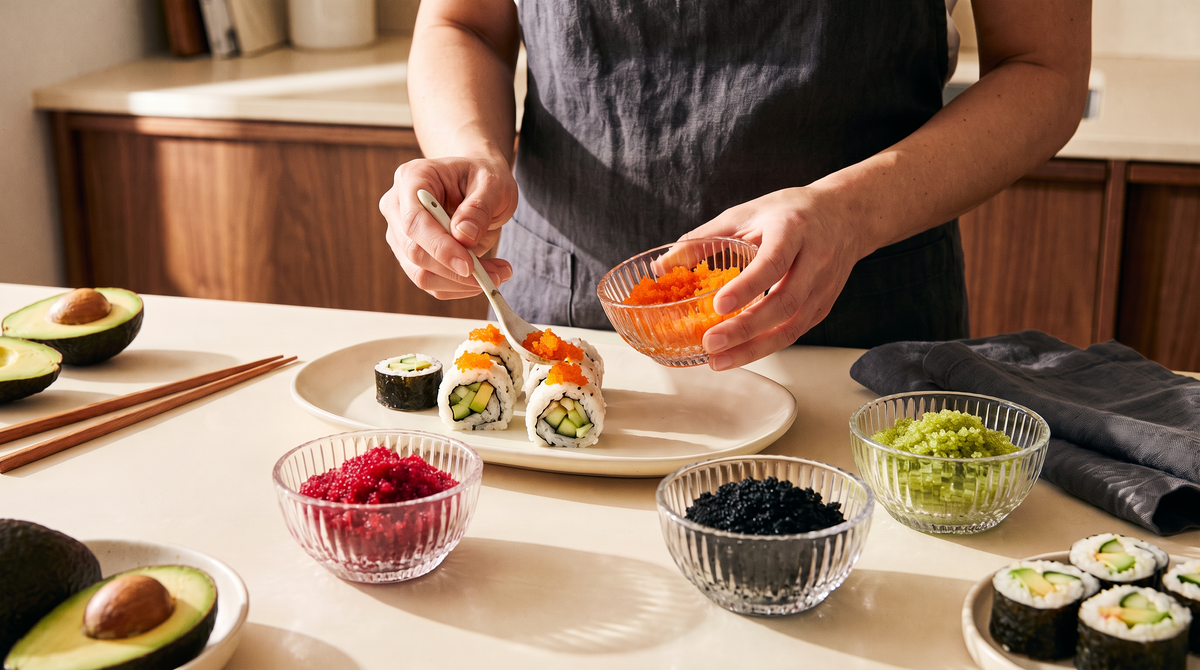
Tobiko is flying fish roe: tiny eggs known for their crisp texture and their use in sushi. The roe brings a small burst of color and a delicate crunch to a finished bite. If you have noticed bright orange pearls on a sushi roll, you may already be familiar with it.
Red, black, green and orange tobiko offer different visual effects at the table. Understanding what the colors do—and do not—tell you will help you choose the right one for your dish.
Tobiko comes from flying fish. Sturgeon caviar comes from sturgeon, so they are different products with different textures and uses. You may see the phrase “tobiko caviar” in retail listings, but the species remains flying fish.
For shopping, read the product name and species information rather than relying on the word “caviar” alone. A tin of black caviar and a portion of tobiko can each have a place on your menu, but they do not need to be used in the same way.
Orange is the natural color family associated with tobiko; commercial products can be colored or seasoned to produce other shades. The exact recipe varies by producer. Color alone does not confirm a flavor, ingredient or allergen profile.
Orange gives a warm, bright finish against white rice, pale fish or a light serving dish. It is an easy visual starting point for a sushi platter. Check the label even when choosing orange, because a natural color family does not guarantee an unseasoned product.
Red makes a strong accent against cucumber, avocado or a neutral canapé base. Use it where you want one small detail to stand out. Do not assume that a red variety is spicy; the ingredients and product description should answer that question.
Black creates contrast against pale rice, a light sauce or a white plate. Try a narrow line across a finished roll or a small mound on an individual bite. Some commercial black varieties use squid ink, but that cannot be assumed for every product.
Green adds a fresh-looking accent to a plate with warm or pale tones. Some products are wasabi flavored; others may use a different formulation. If you are looking for heat, verify the label rather than choosing by the photograph.
These are styling ideas you can adapt to your own recipes. Start with a small amount, taste the complete bite and adjust. Keeping the base similar is also an easy way to compare colors without making four different dishes.
Think about contrast before combining every color. Orange or red can stand out against cool greens, while black gives a pale plate a sharper focal point. A single color repeated across a platter often looks more intentional than using all four on every bite.
For serving inspiration beyond sushi, our caviar hosting guide explores a similarly simple approach to building a tasting table.
Look for the pack weight, ingredient list, storage instructions and any stated seasoning. Where ingredients are not shown, ask the seller before ordering, especially when a particular ingredient or dietary requirement matters. Follow the actual product label for handling and storage.
A crystal bowl is a serving choice, not a promise about retail packaging. Use the listing’s written details to confirm what you will receive.
Not necessarily. Color and seasoning can vary independently, so compare the specific descriptions rather than assuming all orange, red, black or green tobiko follows one recipe.
It can provide a different finish in a recipe, but it will not reproduce the same texture or eating experience. Choose it for its own small, crisp pearls and visual character.
Bring color to your table: browse Black Jewel’s roe selection and check the current Tobiko listings for available colors and pack sizes.

The art of giving
A thoughtful guide to choosing the caviar, serving size and presentation for a gift worth sharing.
Read the story How to Choose a Caviar Gift Box for Any Occasion
At the table
Simple accompaniments, considered portions and a relaxed setup for your first caviar tasting.
Read the story How to Serve Caviar at Home: A Simple Hosting Guide